Ebike Locks
 Phone Mount
 Payment
 Afterpay Financing
 Warranty
 Shipping Policy
 Exclusive Discounts
 Track Your Order
 Return & Refund
 Referrals & Membership
 User Manual
 Contact Us
 FAQs
FAQs
Electric dirt bikes have moved from niche to mainstream, and for many riders, they now outperform gas in key areas like torque delivery, maintenance, and overall ownership experience.
For most modern trail, track, and hobby riders in the U.S., an electric dirt bike is the better long‑term choice, especially if you value instant power, low upkeep, and quieter riding, while gas still makes sense if you need long, remote rides with quick refueling and don’t mind higher maintenance.
Core Differences: Electric vs. Gas Dirt Bikes
Before choosing, it helps to understand how each platform behaves in the real world.
Power Delivery and Performance
Electric
- Delivers instant torque from 0 rpm, giving a very strong low‑end pull that feels “always in the powerband.”
- No shifting or clutch means smoother acceleration and an easier learning curve for new riders.
- Many modern electric dirt bikes let you adjust power maps, throttle response, and regenerative braking via modes or apps, so one bike can feel tame or aggressive depending on the setting.

Gas
- Power builds with rpm; you have to keep the engine “on the pipe” (especially two‑strokes) to access maximum performance.
- Requires clutch and gear management; skilled riders can use this to their advantage, but it’s more demanding.
- Engine characteristics (2‑stroke vs 4‑stroke) are fixed; you can tune jets or mapping, but not as flexibly as software‑based electric modes.
Takeaway: If you want instant, controllable power with less skill barrier, electric wins. If you love managing gears, clutch timing, and riding the powerband, gas still offers that classic experience.
Ownership Experience and Maintenance
Maintenance Requirements
Electric
- No oil changes, no air/fuel filters, no spark plugs, no clutch plates, no carb/EFI tuning.
- Routine tasks are mostly: checking bolts, suspension, chain, brake pads, and keeping the battery and connectors clean and dry.
- Fewer moving engine parts means fewer failure points and less time in the garage.

Gas
- Regular maintenance includes engine oil changes, filter cleaning/replacement, valve checks (4‑stroke), top‑end rebuilds (2‑stroke), plug changes, carb cleaning or EFI diagnostics, plus all the chassis work.
- Higher long‑term consumable cost and more mechanical downtime, especially if you ride hard and often.
Reliability and Complexity
- Electric systems are mechanically simpler, but depend on high‑quality batteries, controllers, and waterproofing.
- Gas bikes are mechanically complex but well‑understood; any decent shop can work on them, and parts are widely available.
Takeaway: If you value low maintenance and minimal servicing, electric is clearly better. If you prefer a platform you can work on anywhere with basic tools and a parts bin, gas remains more “old‑school serviceable.”
Range, Refueling, and Ride Style
How Far Can You Ride?
Electric
- Practical ride time depends on battery capacity, terrain, rider weight, and how hard you ride.
- For most modern electric dirt bikes, you’re often looking at roughly 1–3 hours of spirited off‑road riding per full charge in mixed terrain.
- Perfect for motocross tracks, local trails, private properties, and skill sessions where you return to a base to recharge.

Gas
- Range is limited by tank size, but refueling takes minutes, and you can carry extra fuel cans.
- Better suited to all‑day backcountry rides, dual‑sport style loops, and remote areas where you can’t get back to power easily.
Refueling vs. Recharging
Electric
- Plug in and wait, ideal if you store the bike at home, at a paddock with power, or have fast chargers.
- Planning matters: you think in “sessions” rather than infinite laps.
Gas
- Fill the tank and go—no planning beyond carrying enough fuel.
Takeaway: If your riding is mostly sessions (tracks, local spots, ranches, parks), electric works extremely well. If your style is multi‑hour, remote, no‑infrastructure exploration, gas still has the edge.
Noise, Environment, and Where You Can Ride
Noise and Riding Access
Electric
- Very low noise: you mostly hear the chain, tire, and some motor whine.
- Quieter operation opens access to places where loud exhaust would trigger complaints—private land near neighborhoods, semi‑urban areas, or early‑morning sessions.
- Easier on your hearing and less fatiguing over long rides.

Gas
- Loud combustion noise and exhaust; even with good mufflers, high‑rpm dirt bikes carry sound a long way.
- Many riding areas in the U.S. restrict or scrutinize gas bikes more heavily due to noise, especially near residential zones.
Emissions and Cleanliness
Electric
- No tailpipe emissions, no fuel spills, no exhaust fumes in your face when you ride slowly or do technical work.
- Cleaner garage and transport vehicle—no gas smell from jerry cans or carb overflow.
Gas
- Produces exhaust emissions and fumes; 2‑strokes also burn oil.
- Fuel storage and transport add smell, mess, and some safety considerations.
Takeaway: If you want to ride discreetly, avoid complaints, reduce fumes, and have a cleaner overall setup, electric is clearly superior.
Cost: Upfront vs. Long‑Term
Upfront Purchase
Electric
- Premium electric dirt bikes sit in a similar or slightly higher price band than quality gas MX/enduro machines.
- You’re often paying for high‑density battery packs, sophisticated controllers, and premium component specs.

Gas
- Broad price range from budget trail bikes to high‑end race machines.
- Used gas bikes are widely available and can be significantly cheaper to buy up front than a new premium electric.
Operating Costs
Electric
- Electricity is much cheaper per mile than gasoline.
- Maintenance costs are lower: no regular engine work, fewer fluids, and wear parts.
- Battery replacement is a long‑term cost to consider, but a well‑built pack, correctly used and stored, is designed to last years of regular riding.
Gas
- Ongoing fuel costs, plus oil, filters, and more frequent engine service or rebuilds, add up over time.
- Parts are relatively inexpensive individually, but the cumulative cost over seasons can be significant.
Takeaway: Gas can be cheaper up front, especially used. Over several seasons of regular riding, electric often becomes more economical to operate and maintain, particularly for frequent riders.
Feel and Ride Experience
Beyond specs, choosing between electric and gas often comes down to how you want the bike to feel.
Electric: Modern, Precise, and Customizable
- Immediate throttle response gives a very connected feel to the ground.
- Power delivery can be tuned electronically—mild for beginners, aggressive for experts.
- The lack of gear changes lets you focus on lines, body position, and technique.

This makes electric dirt bikes especially good for:
- Riders coming from mountain bikes or e‑MTBs.
- People who want to sharpen technical skills without worrying about stalling.
- Families sharing one bike with multiple power modes.
Gas: Mechanical, Visceral, and Traditional
- Engine sound, vibration, and shifting are part of the “character.”
- Requires more skill coordination, which some riders love as part of the challenge.
- Huge existing knowledge base in the community for tuning, mods, and race setups.
This can be appealing if:
- You grew up riding gas and enjoy the mechanical feel and sound.
- You like wrenching, tuning, and customizing engines.
- You ride organized gas‑bike events where refueling speed matters.
When an Electric Dirt Bike Is the Better Choice
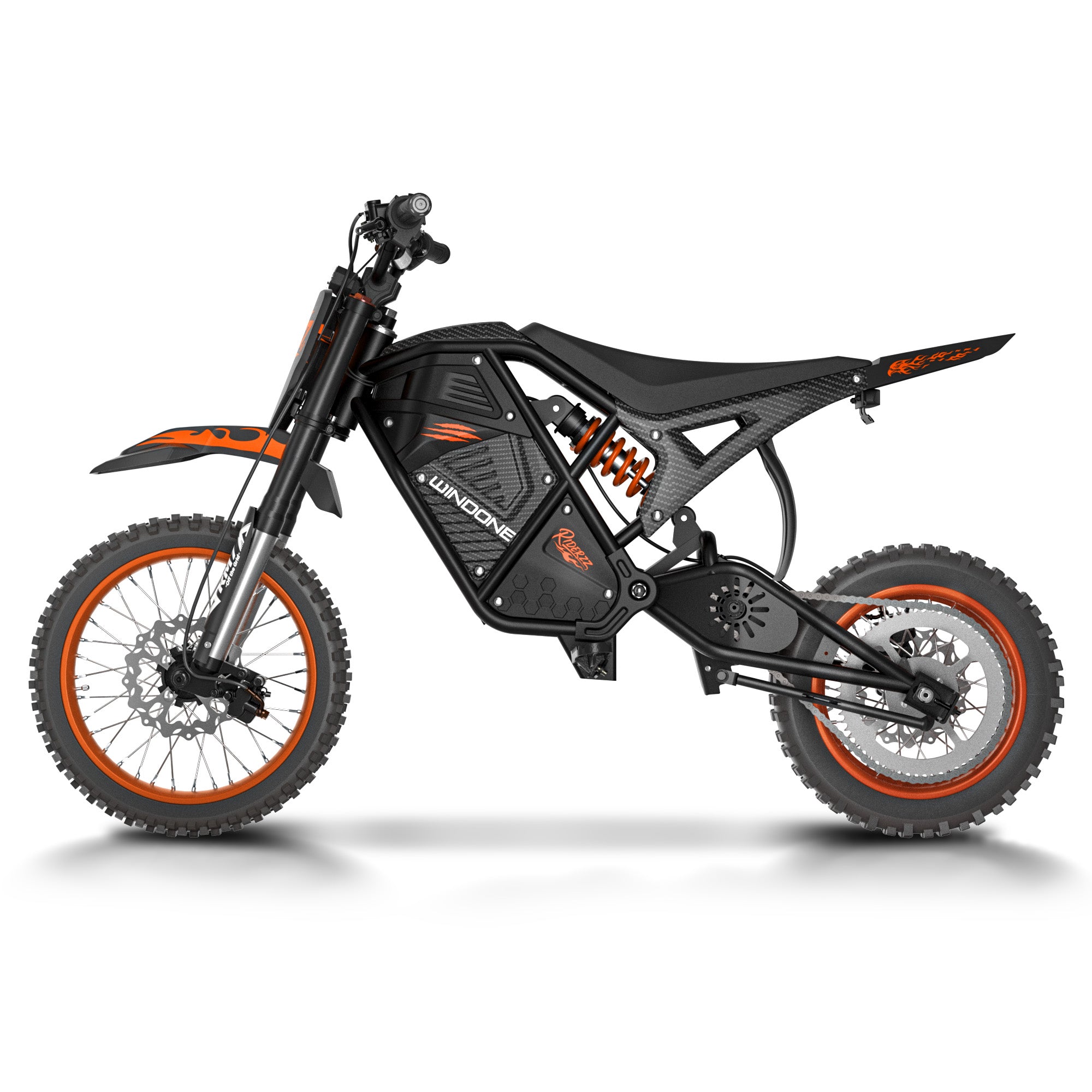
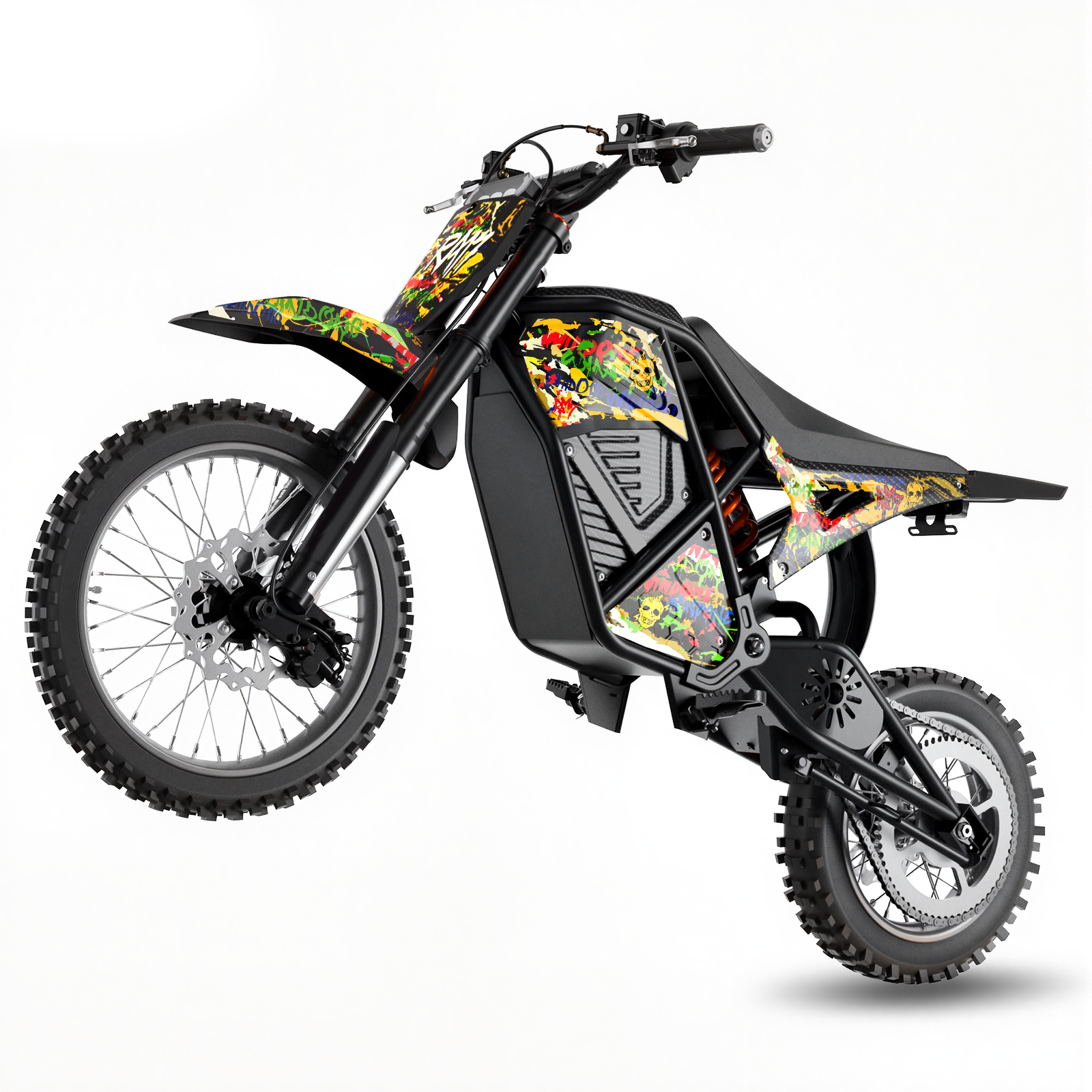
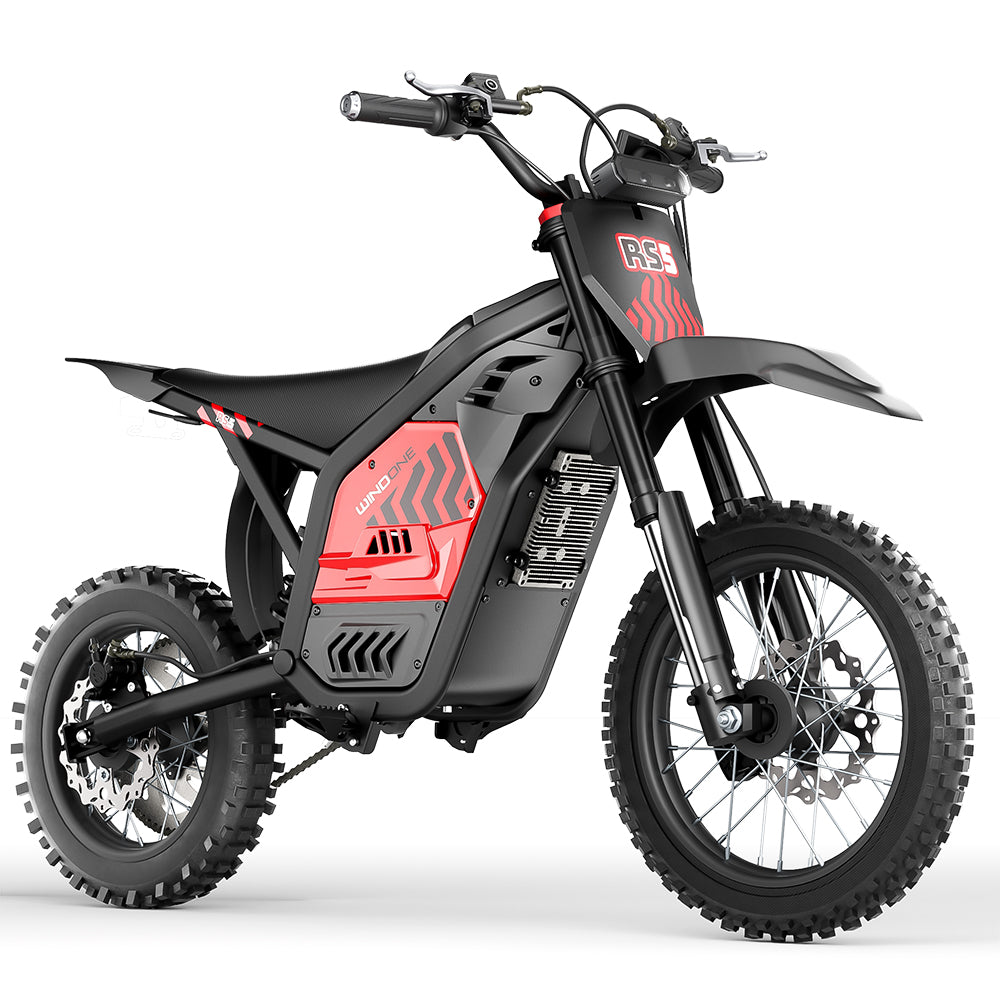
Given the strengths of electric, it’s the better platform for a large share of modern riders, especially those looking at premium electric dirt bikes like the ones Windone sells.
Choose an electric dirt bike if you:
- Ride mostly in sessions, not multi‑day expeditions: Motocross tracks, local trail loops, private property, and weekend parks all fit perfectly with electric ride‑time and recharge cycles.
- Value low maintenance and uptime: You want to ride more and wrench less, with no oil changes, jetting, or top‑end rebuilds.
- Need to manage noise and neighbors: You ride near residential areas, have sound‑sensitive land, or simply prefer a quieter experience.
- Want modern, tunable performance: You appreciate adjustable ride modes, smooth torque, and the ability to “grow” with the bike by unlocking more power as your skills progress.
- Care about the overall cost of ownership: You’re open to investing more up front for a premium electric dirt bike that will be cheaper and simpler to run over the long term.

When a Gas Dirt Bike Still Makes Sense
A gas dirt bike may be the better fit if you:
- Regularly do long, remote rides where returning to a charger is not realistic.
- Want the classic feel of combustion, shifting, and engine sound as part of the experience.
- Rely on local shops that primarily service gas bikes, and you prefer to stick with what they know best.
- Plan to buy something very inexpensive for a first experiment, with the main goal of minimal upfront cost.
How to Decide: A Simple Checklist
Ask yourself these questions and answer honestly:
- Where will you ride most—track, local loops, private land, or remote backcountry?
- Do you enjoy working on engines, or would you rather rarely think about them?
- Are noise and neighbors a concern where you live or ride?
- Are you okay planning your riding in sessions (battery‑based) instead of indefinite loops (fuel‑based)?
- Is your priority long‑term low hassle, or the lowest possible initial purchase price?
If you:
- Mostly ride-controlled environments (tracks, local spots, properties),
- Want clean, adjustable power with minimal maintenance, and
- Care about having a modern, future‑proof platform
…then a premium electric dirt bike is almost certainly the right choice.